
Kosovan cuisine
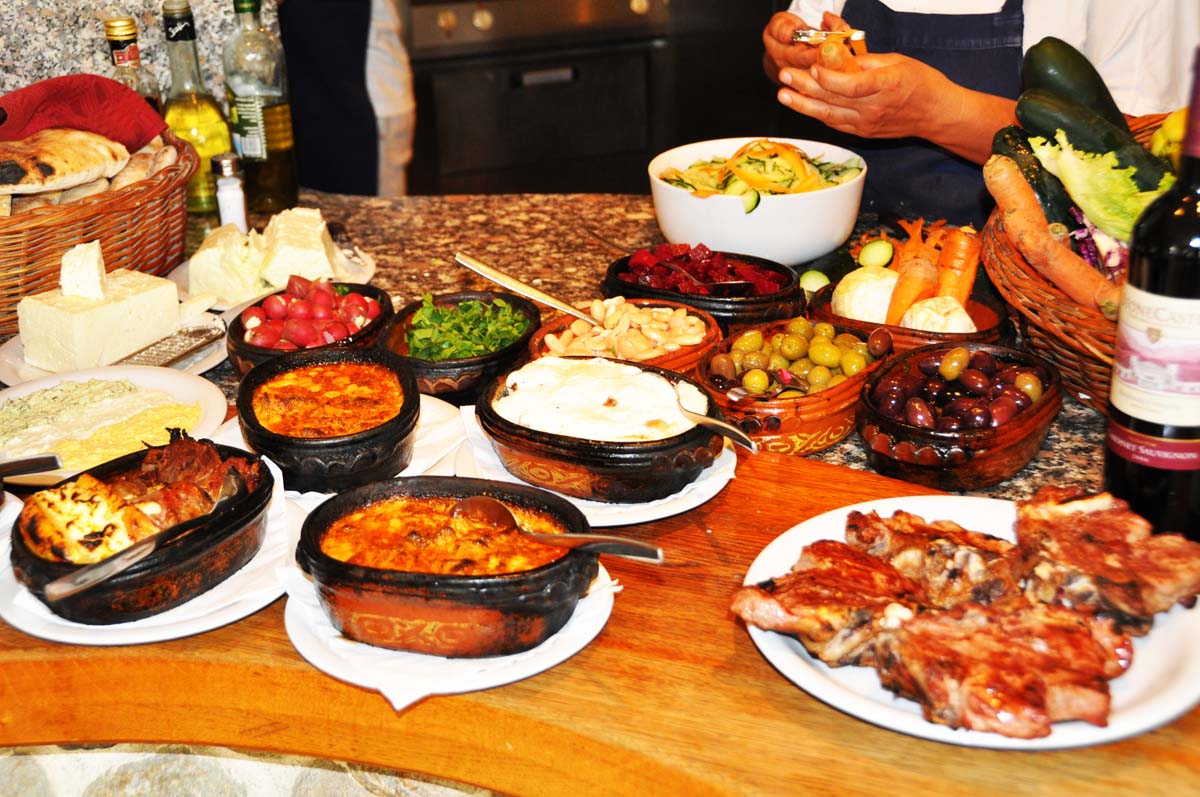
Balkan cuisine shaped by Albanian tradition and regional influences.

Bresta · CC BY-SA 4.0
Kosovan cuisine reflects the broader culinary traditions of the Balkans, shaped by the ethnic groups living in the country. Since Albanians form the majority, the cuisine is largely an expression of Albanian cooking, while also incorporating elements from neighboring Balkan nations.
Staples include bread, dairy, meat, fruits, and vegetables. The daily diet adapts to Kosovo’s continental climate, with fresh vegetables common in the hot summers and pickled foods—such as sauerkraut, green tomatoes, cucumbers, and cauliflower—used throughout autumn and winter. Breakfast is typically light, featuring items like croissants with coffee, sandwiches, scrambled eggs, omelettes, petulla, or toast with salami, processed cheese, lettuce, and tea. Children often eat cereals with milk, waffles, pretzels, or homemade pancakes with honey or marmalade.
Common dishes include pies, flija, stuffed peppers, legumes, sarma, and kebab/qebapa. In winter, pickled items and condiments like ajvar (hot or mild red pepper paste, seasoned in early autumn) are used in appetizers year-round.
A variety of breads are available nationwide, such as pitalka, pita, cornbread (also called leqenik), nore (or pogaçe), kifli, and whole wheat bread.
Pies, known as trejte or pite, come in many forms: kollpite (a baked crust with nothing inside, covered with yogurt), burek (pastry layers filled with minced meat, white cheese, or spinach), bakllasarm (a salty pie with yogurt and garlic), kungullore (savory pastry with pumpkin filling), pite me spanaq (spinach-filled pastry, also called spanakopita), leqenik (also known as kryelanë or krelanë), resenik (cabbage pie), purrenik (leek pie), and hithenik (nettle pie).
Salads and appetizers often feature tomatoes, onion, garlic, pepper, cucumber, potato, cabbage, lettuce, carrots, and beans. Common salads include potato salad, tarator (cucumbers, garlic, and yogurt, served in summer), shope salad (tomato, cucumber, onions, and white cheese), tomato salad (tomato, onions, and optional chili peppers), and sallatë të zime (a cooked salad of tomato, onions, peppers, garlic, and cream, similar to Albanian fërgesë). A traditional dairy food, known regionally as long, lang, or t’ngjym, is made from milk fat (cream) often mixed with curd or cottage cheese (gjizë). It is eaten with bread as a spread or for dipping, served cold with raw garlic or warm (i vlum) with
- Field
- Cuisine
- Nationality
- Kosovan
- Known for
- Bread, dairy, meat, fruits and vegetables as staples; pies such as burek and flija; grilled meats like qebapa; and traditional drinks including coffee, boza, and rakia
Lore & Background
Bread, dairy, meat, fruits and vegetables are important staples in Kosovan cuisine. With diversity of recipes, the daily cuisine adjusts well to the country's occasional hot summers and frequent long winters. Fresh vegetables are consumed in summer while pickles throughout autumn and winter. Breakfast is usually light, consisting primarily of a croissant with coffee, sandwiches, scrambled eggs, omelettes, petulla or toast with salami, processed cheese, lettuce and tea.
Reader's Guide
Common dishes include pies, flija, stuffed peppers, legumes, sarma, and kebab/qebapa. In wintertime, pickled items like sauerkraut, green tomatoes, cucumbers, cauliflower, and condiments such as ajvar are used in appetizers throughout the year. Varieties of bread are available, including pitalka, pita, cornbread (also known as Leqenik), nore (also known as pogaçe), kifli and whole wheat bread. Pies known as 'trejte' or 'pite' include kollpite, burek, bakllasarm, kungullore, pite me spanaq, leqenik, resenik, purrenik, and hithenik. Salads often feature tomatoes, onion, garlic, pepper, cucumber, potato, cabbage, lettuce, carrots, and beans. Main dishes include Tavë Prizreni, sarma, stuffed peppers, lasagne, qebapa, pilaf, pasulj, suxhuk, tavë, and tavë kosi. Fish dishes include fried freshwater fish like zander and carp, and tavë krapi. Desserts include baklava, cremeschnitte, pudding, crêpe, tulluma, tespishte, and rovani. Drinking coffee is part of a big tradition; popular traditional drinks include rasoj, boza, lemonade, kompot, beer, and teas.
Did You Know?
- A traditional dairy-based food known regionally as 'long'/'lang' or 't’ngjym' is consumed with bread and constitutes a characteristic element of rural and domestic food culture.
- Rasoj is a probiotic fermented red cabbage juice consumed mostly during the winter.
- Tavë Prizreni is a traditional regional casserole from the southern city of Prizren made with lamb, eggplants, okra, green peppers, onions, and tomatoes.
- Baklava is a rich, sweet pastry made of layers of filo pastry filled with chopped nuts and sweetened with syrup or honey.
Historical Layers and Culinary Evolution
The culinary identity of this region stretches back nearly two and a half millennia. During the Illyrian period, spanning roughly 900 BCE to 600 CE, everyday sustenance revolved around grains, legumes, wild herbs, and dairy, with wheat serving as a dietary cornerstone thanks to the area's fertile soil and Mediterranean climate. Roman expansion in the second century CE introduced grapes, olives, and additional staples that would reshape local agriculture for centuries. The Byzantine period layered in a distinctly Mediterranean palette—olive oil, seafood, and an abundance of aromatic herbs—while the Ottoman conquest of the fifteenth century wove Turkish flavors into the daily table. Savory pies like byrek, sweet baklava, and grilled kebabs became household fixtures, and warming spices such as cinnamon, cloves, and nutmeg found their way into rice-based preparations like pilaf. The twentieth century brought yet another chapter: Yugoslav neighbors contributed ajvar, a roasted eggplant and pepper relish, while the forty-five-year Hoxha regime (1945–1990) imposed rationing, banned fishing, and pushed a homogenized national cuisine that suppressed regional variety. Since the fall of that system, younger generations have been actively reclaiming and popularizing recipes that the state had discouraged.
Three Regions, Three Kitchens
The country's varied topography gives rise to three distinct culinary zones. In the north, where the landscape shifts between rural farmland, coastline, and mountain terrain, the table centers on meat, fish, and vegetables. Locals make heavy use of what the land naturally yields—potatoes, carrots, maize, beans, and cabbage—alongside stone fruits like cherries and tree nuts such as walnuts and almonds. Garlic and onions appear in virtually every preparation. The central region, the flattest and most biodiverse part of the country, blends rural, mountainous, and coastal influences. Its closeness to the sea brings an abundance of fish, while the fertile vegetation supports a wide array of meat specialties and an impressive range of desserts. In the south, the cuisine splits into two streams: the products of the field, including dairy, citrus fruits, and olive oil, and the seafood harvested from the coast. The region's abundant pastures and feed resources make it particularly well suited to animal husbandry, ensuring a steady supply of fresh meat and dairy that anchors the local diet.
The Sacred Duty of Hospitality
In this culture, welcoming a stranger to the table is not merely polite—it is a moral obligation rooted in centuries of tradition. Hospitality stands as one of the foundational customs of Albanian society, and the act of preparing and serving food lies at the very heart of how guests are received. It is entirely ordinary for a traveler or visitor to be drawn into a local home, where they are offered a full meal and drinks alongside the family. This practice is not a modern invention but flows directly from besa, the medieval Albanian code of honor, which codified the protection and care of guests and strangers as an expression of recognition and gratitude. Under besa, turning away a hungry stranger would have been a serious breach of social contract. The cuisine itself reinforces this ethos: dishes are typically prepared in generous quantities, shared communally, and accompanied by warm beverages such as coffee, tea, or raki. The kitchen becomes a space of trust and generosity, where the boundaries between host and guest dissolve over a shared plate of olives, bread, and slowly cooked meat.
A Day at the Albanian Table
The daily rhythm of eating follows a clear pattern. Breakfast tends to be light and unhurried: a slice of bread spread with butter, cheese, or jam, a dollop of yogurt, a handful of olives, and a cup of coffee, tea, milk, or raki. In rural communities, a thick soup called tarhana—made from wheat and fermented milk—often takes the place of a more elaborate spread. Some mornings are as simple as a piece of fruit and a hot drink. Lunch, by contrast, is the day's centerpiece for everyone, from schoolchildren to office workers. The classic lunch dish is gjellë, a slow-cooked preparation of meat and vegetables, served alongside a fresh salad of tomatoes, cucumbers, green peppers, onions, and olives, dressed simply with salt, olive oil, and a splash of white vinegar or lemon juice. Grilled or fried vegetables, sausages, and various omelettes round out the plate. Supper is the lightest of the three meals, often resembling breakfast in structure: assorted breads, cheese, eggs, fresh fish or seafood, and vegetables, sometimes assembled into sandwiches. Coffee and tea are constant companions, enjoyed at home and in neighborhood cafés throughout the day.
Gallery
Frequently Asked Questions
Who is Kosovan cuisine?
Kosovan cuisine is the culinary tradition of Kosovo, built primarily on Albanian cooking since Albanians make up the ethnic majority. It also layers in influences from neighboring Balkan nations, giving it a distinct regional voice within the wider Balkan food world.
What are Kosovan cuisine's powers/role?
Its signature strengths include layered pies such as burek and flija, grilled meats like qebapa, and a bread-and-dairy foundation that anchors most meals. Traditional drinks—coffee, boza, and rakia—complete the table.
How does Kosovan cuisine's story arc through the year?
The menu tracks Kosovo's continental climate: fresh vegetables take center stage in hot summers, while pickled staples like sauerkraut, green tomatoes, cucumbers, and cauliflower sustain the table through autumn and winter. Breakfast stays deliberately light in every season.
Why is Kosovan cuisine important to the canon?
It functions as a living expression of Albanian identity in the region while simultaneously reflecting the multicultural mix of the Balkans. Its core staples—bread, dairy, meat, fruits, and vegetables—tie together everyday meals and seasonal celebrations alike.
What is Kosovan cuisine's relationship to Albanian cuisine?
Because Albanians form the majority in Kosovo, the local food is essentially an extension of Albanian cooking traditions. Neighboring Balkan elements add regional color, but the underlying techniques and signature dishes remain distinctly Albanian.
More in Albanian cuisine 1-18
Spotted an error? Know more?
This is a living reference — every entry is fact-audited, and reader corrections feed straight into our audit queue. Suggest an edit · See this site's audit record